Comprehensive Safety and Prevention Guide

Learn about strategies and resources to enhance personal safety, recognize warning signs, and prevent sexual violence in various settings.

Table of Contents

Sexual Assault Prevention PDF

Safety & Prevention

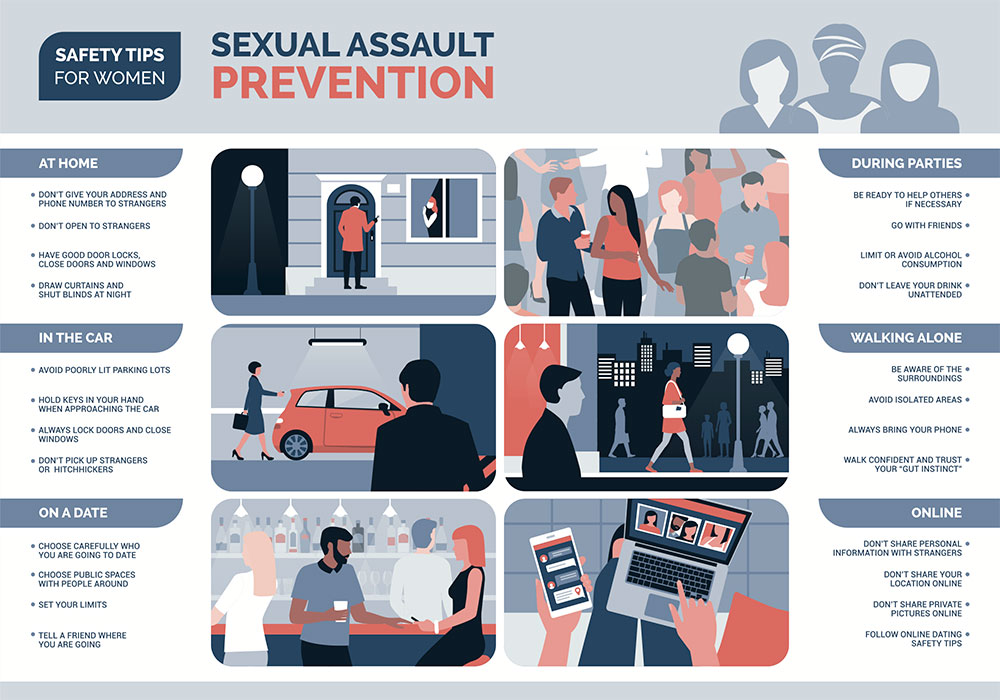
Staying safe involves being aware of your surroundings, trusting your instincts, and taking proactive measures to protect yourself. This can include avoiding isolated areas, keeping your phone charged and accessible, and informing friends or family about your whereabouts. Carrying personal safety devices and being cautious in social settings, especially where alcohol or drugs are involved, can also enhance personal safety. These measures can help reduce the risk of sexual violence and increase your sense of security.

Protecting others from sexual violence involves being vigilant and proactive. If you notice someone in a vulnerable situation, such as being heavily intoxicated or isolated, take steps to ensure their safety. This can include offering to accompany them, contacting friends or family for assistance, or alerting authorities if necessary. Creating a culture of respect and intervention, where everyone feels responsible for each other’s safety, is crucial in preventing sexual violence.

Parents play a critical role in protecting their children from sexual violence. Open communication is key; parents should educate their children about body autonomy, consent, and how to recognize inappropriate behavior. It’s important to create an environment where children feel safe reporting any uncomfortable situations. Additionally, parents should be aware of the signs of abuse, which can include changes in behavior, unexplained injuries, and reluctance to be around certain individuals. Vigilance and proactive education can help safeguard children from harm.

Students, especially those in college, face unique risks related to sexual violence. Practicing safe behaviors, such as traveling in groups, staying aware of surroundings, and knowing campus resources, is essential. Understanding the role of alcohol and drugs in reducing inhibitions and increasing vulnerability can help students make informed choices. Bystander intervention training and promoting a culture of respect and consent are also vital in creating a safer campus environment.

Recognizing the warning signs of sexual violence can help in early intervention and support. For children, signs might include sudden changes in behavior, regression to earlier developmental stages, and unexplained injuries. Teenagers might display riskier behaviors, avoidance of certain people or places, and emotional withdrawal. College-age adults might show changes in academic performance, substance abuse, or social withdrawal. Being aware of these signs and taking them seriously can prompt timely action to support and protect the individual.

Online interactions pose unique risks, including exposure to predators and inappropriate content. Practicing online safety involves being cautious about sharing personal information, using privacy settings on social media, and recognizing suspicious behavior. Educating oneself and loved ones about the risks of online grooming and cyberstalking is crucial. Reporting and blocking inappropriate behavior and using secure and reputable websites can also enhance online safety.

Grooming involves manipulative behaviors aimed at gaining a victim’s trust to facilitate abuse. Recognizing grooming can be challenging but includes excessive attention, gift-giving, and isolating the victim from friends and family. Educating children and adults about these behaviors and maintaining open lines of communication can help prevent grooming. Understanding the legal aspects and reporting suspicious behavior to authorities are also important steps in addressing grooming.

Bystander intervention is the act of stepping in to prevent or stop sexual violence when witnessing it. This can include directly intervening, creating a distraction, or seeking help from others. Training programs can equip individuals with the skills to safely and effectively intervene. Encouraging a culture where intervention is expected and supported can significantly reduce incidents of sexual violence and create a safer community for everyone.

Safety for Parents

Starting conversations about sexual assault with your children can be a daunting task, but it is essential for their safety and well-being. Use age-appropriate language to explain the concepts of body autonomy, consent, and boundaries. Teach them that it’s okay to say no to any touch that makes them uncomfortable, even if it’s from someone they know and trust. Reinforce that they should always come to you if they feel uncomfortable or if someone tries to break these boundaries. Regularly revisiting this conversation can help children understand that they can talk to you openly about their feelings and experiences. Resources such as the National Sexual Violence Resource Center (NSVRC) and Child Mind Institute provide valuable guidelines for these discussions​ (RAINN)​​ (RAINN)​.

Protecting your child involves a multifaceted approach that includes education, supervision, and communication. Teach your children the proper names for their body parts and the difference between safe and unsafe touches. Establish rules about physical boundaries and personal space. Be vigilant about the adults who interact with your child and monitor their activities, including online interactions. Encourage your child to trust their instincts and come to you with any concerns. The American Academy of Pediatrics and the Centers for Disease Control and Prevention (CDC) offer extensive resources and preventive measures that parents can implement to safeguard their children.

If you suspect a child is being harmed, it is crucial to take immediate action to ensure their safety. Look for signs such as sudden changes in behavior, unexplained injuries, or fear of certain people. If a child confides in you, remain calm, believe them, and reassure them that they did the right thing by speaking up. Report your suspicions to child protective services or law enforcement immediately. Professional support from organizations like Darkness to Light and the Child Welfare Information Gateway can provide further guidance and resources to help the child and their family navigate this difficult situation .

For more detailed information and resources, you can visit:

Grooming Warning Signs

Grooming involves a series of manipulative behaviors used by predators to gain a victim’s trust and prepare them for abuse. These tactics can include giving gifts, offering special attention, isolating the victim from their support networks, and gradually desensitizing them to inappropriate behavior. Educating yourself and your children about these behaviors is crucial for early detection and prevention. Awareness of grooming can empower children to recognize and report inappropriate interactions. Legally, many jurisdictions have specific laws against grooming, with significant penalties for those convicted. Resources like the National Society for the Prevention of Cruelty to Children (NSPCC) and Stop It Now! offer extensive information on recognizing grooming behaviors and understanding the legal context.

Groomers often shower their targets with excessive attention and affection to build trust and make the victim feel special. This can include constant communication, flattery, and unwarranted physical contact. The attention may start innocently but gradually becomes more intense and personal, making the victim reliant on the groomer for emotional support. Recognizing these signs early can prevent further manipulation and potential abuse.

Groomers may give their victims gifts or grant them special privileges to create a sense of obligation and loyalty. These gifts can range from small tokens to expensive items, and the privileges might include exclusive outings or experiences. The victim may feel indebted to the groomer, making it harder to resist their advances. Understanding this tactic is crucial for identifying and stopping grooming behaviors before they escalate.

A common strategy used by groomers is to isolate their victims from their support systems. This can involve subtly undermining the victim’s relationships, creating conflicts with friends and family, or monopolizing their time. By isolating the victim, the groomer ensures that they become the primary source of support and influence in the victim’s life. Awareness of this tactic can help friends and family intervene and provide necessary support to the victim.

Groomers often encourage or insist on secrecy to prevent their behavior from being exposed. This can include secret meetings, private messages, and asking the victim to hide details of their interactions from others. The secrecy makes it difficult for the victim to seek help or realize the inappropriate nature of the relationship. Recognizing and addressing secretive behavior is vital for protecting potential victims from further harm.

Emotional manipulation is a key component of grooming. Groomers may use guilt, threats, and flattery to control and influence their victims. They might manipulate the victim’s emotions by alternating between kindness and hostility, making the victim feel confused and dependent. Understanding these manipulative tactics helps in identifying grooming behavior and supporting victims in breaking free from the groomer’s control.

Online grooming is a growing threat as children spend more time on the internet. Predators use social media, gaming platforms, and chat rooms to connect with potential victims, often posing as peers to gain trust. They may exploit vulnerabilities by offering emotional support, sharing interests, and gradually introducing sexual content. To protect children, it’s essential to monitor their online activities, educate them about internet safety, and encourage open communication about their online interactions. Tools like privacy settings, parental controls, and awareness of the platforms children use can significantly reduce the risk of online grooming. Organizations such as NetSmartz and the Internet Watch Foundation provide resources and guidelines for preventing online grooming and ensuring children’s safety online.

For further reading and resources on grooming behaviors and online safety, you can visit:

Safety for Students and Prevention of Sexual Assault on Campus

Ensuring safety on campus involves being aware of your surroundings and taking proactive measures to protect yourself. Students should familiarize themselves with campus safety resources, such as emergency phones, safe ride programs, and security escort services. Traveling in groups, especially at night, and staying in well-lit areas can also reduce risks. Additionally, knowing the layout of the campus and identifying safe places to go in an emergency can enhance personal security. Institutions like the Clery Center offer comprehensive safety tips and resources for students.

Alcohol and drug use can increase vulnerability to sexual violence, so it’s important for students to understand how to stay safe while consuming these substances. This includes knowing your limits, never leaving drinks unattended, and avoiding accepting drinks from strangers. Having a trusted friend who can look out for you and vice versa can also provide an extra layer of safety. Organizations such as the National Institute on Alcohol Abuse and Alcoholism (NIAAA) provide guidelines and educational materials on safe drinking practices.

Active bystander intervention involves recognizing potentially harmful situations and taking steps to prevent them from escalating. Techniques include direct intervention, distraction, and seeking help from authorities. By learning to identify warning signs and confidently stepping in, students can play a crucial role in preventing sexual violence. Programs like Green Dot and Step UP! provide training and resources to help students develop these skills.

Understanding consent is fundamental to preventing sexual violence. Consent must be clear, enthusiastic, and ongoing, meaning it can be withdrawn at any time. It’s important for students to communicate openly with their partners and ensure that all parties are comfortable with the progression of any sexual activity. The concept of affirmative consent—where yes means yes and anything else means no—should be emphasized. Educational campaigns and resources from organizations like Planned Parenthood and Love is Respect can help clarify these principles.

Student activism plays a vital role in combating sexual violence on campuses. Students can participate in or organize awareness campaigns, join or form groups dedicated to supporting survivors, and advocate for policy changes within their institutions. Activism can also involve collaborating with campus authorities to improve safety measures and reporting processes. Organizations like End Rape on Campus (EROC) and It’s On Us provide platforms and resources for student activists seeking to make a difference.

For more detailed information and resources, you can visit:

Bystander Intervention

As a bystander, there are several actions you can take to help prevent sexual assault. These include recognizing the signs of potentially harmful situations, such as someone being isolated or appearing uncomfortable. Direct intervention can be effective, such as approaching the individuals involved and checking if they are okay. Alternatively, creating a distraction or involving others, including calling for professional help or alerting authorities, can also defuse the situation. Training programs like those offered by Green Dot and Step UP! equip individuals with the skills and confidence needed to intervene safely. By being vigilant and proactive, bystanders can play a crucial role in preventing sexual violence and supporting a culture of safety and respect.

There are several reasons why people may hesitate to intervene in situations of potential sexual violence. Common barriers include the fear of personal harm, uncertainty about the situation, not knowing how to intervene, and the assumption that someone else will step in. Additionally, social and cultural factors, such as not wanting to cause a scene or the influence of group dynamics, can also inhibit action. Overcoming these barriers involves educating oneself about bystander intervention strategies, building confidence through practice and training, and fostering a community culture that supports and encourages intervention. Organizations like RAINN and It’s On Us provide valuable resources and training programs to help individuals understand and overcome these barriers, empowering them to act when it matters most. For more detailed information and resources, visit:
Consent can change at anytime. Even if you have been intimate before, have been flirtatious prior, you decide when you want to be intimate and do not want to be. Coercion, threats, intimidation and acts of force to get an individual to be intimate are illegal and forms of abuse and harassment. At 1-800-WE-SURVIVED, we believe in the strength and resilience of survivors. If you or someone you know has been affected by sexual assault or harassment, we are here to provide compassionate support and powerful legal resources. Reach out to us for a free consultation and let us help you seek justice. Call 1-800-937-8784 or visit www.1800wesurvived.com today. Together, we can make a difference. #SurvivorSupport  #womensrights #womensempowerment #JusticeForSurvivors #Empowerment #WeBelieveYou #1800WeSurvived #sexualassault #seekjustice #today #freeconsultation #foryoupage #fyp
At 1-800-WE-SURVIVED, we believe in the strength and resilience of survivors. If you or someone you know has been affected by sexual assault or harassment, we are here to provide compassionate support and powerful legal resources. Reach out to us for a free consultation and let us help you seek justice. Call 1-800-937-8784 or visit www.1800wesurvived.com today. Together, we can make a difference. 💪  #SurvivorSupport #JusticeForSurvivors #Empowerment #WeBelieveYou #1800WeSurvived #seekjustice #today #freeconsultation #abusesurvivor #abuseawareness #foryou
Consent can change at anytime. Even if married, have been intimate before, have been flirtatious prior, you decide when you want to be intimate and do not want to be. Coercion, threats, intimidation and acts of force to get an individual to be intimate are illegal and forms of abuse and harassment. At 1-800-WE-SURVIVED, we believe in the strength and resilience of survivors. If you or someone you know has been affected by sexual assault or harassment, we are here to provide compassionate support and powerful legal resources. Reach out to us for a free consultation and let us help you seek justice. Call 1-800-937-8784 or visit www.1800wesurvived.com today. Together, we can make a difference. #SurvivorSupport #marriageadvice #relationships #JusticeForSurvivors #Empowerment #WeBelieveYou #1800WeSurvived #sexualassault #seekjustice #today #freeconsultation #foryoupage #fyp
Many children do not report abuse immediately, and some may never disclose it at all due to fear of not being believed, shame, confusion, or threats from the abuser. At 1-800-WE-SURVIVED, we believe in the strength and resilience of survivors. If you or someone you know has been affected by sexual assault or harassment, we are here to provide compassionate support and powerful legal resources. Reach out to us for a free consultation and let us help you seek justice. Call 1-800-937-8784 or visit www.1800wesurvived.com today. Together, we can make a difference. #SurvivorSupport #JusticeForSurvivors #Empowerment #WeBelieveYou #1800WeSurvived #sexualassault #seekjustice #today #freeconsultation #foryoupage #fyp
At 1-800-WE-SURVIVED, we believe in the strength and resilience of survivors. If you or someone you know has been affected by sexual assault or harassment, we are here to provide compassionate support and powerful legal resources. Reach out to us for a free consultation and let us help you seek justice. Call 1-800-937-8784 or visit www.1800wesurvived.com today. Together, we can make a difference. 💪  #SurvivorSupport #JusticeForSurvivors #Empowerment #WeBelieveYou #1800WeSurvived #seekjustice #freeconsultation #today #sexualassault
At 1-800-WE-SURVIVED, we believe in the strength and resilience of survivors. If you or someone you know has been affected by sexual assault or harassment, we are here to provide compassionate support and powerful legal resources. Reach out to us for a free consultation and let us help you seek justice. Call 1-800-937-8784 or visit www.1800wesurvived.com today. Together, we can make a difference. 💪  #SurvivorSupport #JusticeForSurvivors #Empowerment #WeBelieveYou #1800WeSurvived #seekjustice #freeconsultation #today #fyp #fypage
This error message is only visible to WordPress admins
Error: The stored access token is no longer valid. Feed will not update.